
There are nights when takeout sounds tempting simply because cooking feels like too much work. This garlic butter shrimp pasta is made for exactly those nights. It’s buttery, garlicky, lightly lemony, loaded with juicy shrimp, and ready in about 15 minutes when you keep things moving.
What makes our “Crazzy” version special? Nothing complicated. We use plenty of fresh garlic, good butter, a little lemon, Parmesan, and reserved pasta water to create a glossy sauce that actually clings to the noodles. It tastes restaurant-worthy without cream, expensive ingredients, or a sink full of dishes.
Why You’ll Love This Garlic Butter Shrimp Pasta
This is one of those recipes worth keeping in your weeknight rotation because most of the ingredients are everyday kitchen staples. While the pasta boils, you cook the shrimp and start the garlic butter sauce. By the time the noodles are ready, dinner is almost finished.
It’s also incredibly easy to customize. Make it spicy with extra red pepper flakes, richer with Parmesan, brighter with more lemon, or toss in spinach and tomatoes. Serve it alone for a quick dinner or add garlic bread and salad when you want something more complete.
Garlic Butter Shrimp Pasta at a Glance
| Details | Information |
|---|---|
| Prep Time | 5 minutes |
| Cook Time | 10 minutes |
| Total Time | About 15 minutes |
| Servings | 4 |
| Difficulty | Easy |
| Best Pasta | Linguine, spaghetti or fettuccine |
| Main Protein | Shrimp |
| Sauce | Garlic butter lemon sauce |
Ingredients You’ll Need
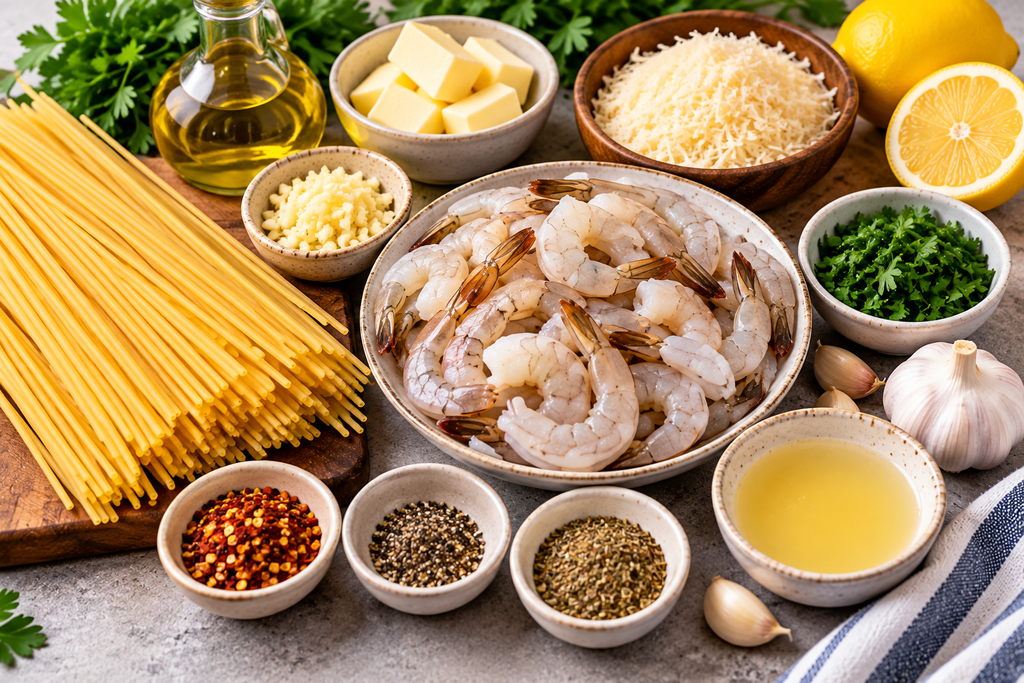
You don’t need a long shopping list for this easy shrimp pasta recipe. The sauce gets most of its personality from butter, fresh garlic, lemon, seasonings, and the flavorful bits left behind after cooking the shrimp.
| Ingredient | Amount | Purpose |
|---|---|---|
| Linguine or spaghetti | 12 oz | Base of the dish |
| Large shrimp, peeled and deveined | 1 lb | Main protein |
| Unsalted butter | 5 tbsp | Rich garlic butter sauce |
| Olive oil | 1 tbsp | Helps cook the shrimp |
| Fresh garlic, minced | 5–6 cloves | Main flavor |
| Fresh lemon juice | 2 tbsp | Adds brightness |
| Parmesan, finely grated | ½ cup | Savory finish |
| Red pepper flakes | ¼–½ tsp | Gentle heat |
| Salt | To taste | Seasoning |
| Black pepper | ½ tsp | Seasoning |
| Italian seasoning | ½ tsp | Extra flavor |
| Pasta water | ½–¾ cup | Helps emulsify the sauce |
| Fresh parsley | 2 tbsp | Fresh finish |
| Lemon wedges | For serving | Optional |
How to Make Garlic Butter Shrimp Pasta in 15 Minutes
The secret to actually finishing this recipe quickly is working in parallel. Don’t wait until the pasta is cooked before touching the shrimp. Have the garlic minced, shrimp dried, Parmesan grated, and seasonings ready before you begin.
Put the pasta water on first. While the noodles cook, prepare the shrimp and sauce in a large skillet. The pasta should finish at roughly the same time as your sauce, allowing everything to come together while it’s hot.
Step 1: Boil the Pasta
Bring a large pot of generously salted water to a boil. Add the linguine or spaghetti and cook according to the package directions until al dente. Before draining, scoop out about 1 cup of pasta water.
Don’t rinse the pasta. The starch remaining on its surface helps the garlic butter sauce stick to the noodles instead of sliding to the bottom of your bowl.
Step 2: Season the Shrimp
Pat the shrimp dry with paper towels. Season them with salt, black pepper, Italian seasoning, and a small pinch of red pepper flakes.
Removing excess moisture matters more than it seems. Wet shrimp tend to steam in the skillet, while dry shrimp develop better color and flavor during their short cooking time.
Step 3: Cook the Shrimp
Heat olive oil and 1 tablespoon butter in a large skillet over medium-high heat. Add the shrimp in one layer without overcrowding the pan.
Cook briefly on each side until the shrimp are opaque and cooked through, then transfer them to a plate. USDA guidance lists 145°F (63°C) as the safe minimum for fish and shellfish; FDA guidance also says cooked shrimp flesh should be opaque.
Step 4: Make the Crazzy Garlic Butter Sauce
Reduce the heat to medium-low and add the remaining butter. Once melted, stir in the minced garlic and remaining red pepper flakes. Cook briefly until fragrant.
Don’t brown the garlic heavily. Garlic can move from fragrant to bitter surprisingly quickly. You want it softened and aromatic before adding the lemon juice and about ½ cup reserved pasta water.
Read Also: 25 Easy Chicken Pasta Recipes for Quick & Delicious Dinners
Step 5: Toss Everything Together
Add the drained pasta directly to the skillet and toss it through the garlic butter mixture. Sprinkle in Parmesan gradually while tossing until the sauce becomes glossy and coats the noodles.
Return the cooked shrimp to the skillet and toss gently. Add another splash of pasta water if the noodles look dry. Finish with parsley, fresh lemon juice, black pepper, and additional Parmesan.
The Secret Ingredient Isn’t More Butter
Butter gives the dish richness, but reserved pasta water is what turns melted butter into something closer to a proper pasta sauce. The starch in the water helps the fat and liquid come together while also helping the sauce cling to the noodles.
Add it gradually rather than dumping everything in at once. Start with roughly half a cup, toss vigorously, then decide whether you need more. Your finished pasta should look silky and glossy, not watery or greasy.
How to Keep Shrimp Juicy Instead of Rubbery
Shrimp cook remarkably quickly, which is both convenient and dangerous. Leave them in the skillet too long and their tender texture becomes firm and rubbery. That’s why this recipe removes them before finishing the sauce.
Shrimp size also affects cooking time, so don’t rely solely on the clock. Cook until they’re properly done, then get them out of the hot skillet. For an objective safety check, use a food thermometer; USDA recommends thermometers because appearance alone isn’t always a reliable measure of food safety.
Fresh or Frozen Shrimp: Which Is Better?
Either works. Frozen shrimp are particularly convenient because you can keep a bag ready for quick dinners. If using frozen shrimp, thaw them completely and pat them very dry before seasoning.
For the fastest preparation, buy shrimp that are already peeled and deveined. Tails can stay on for presentation, but removing them makes pasta considerably easier to eat. Medium-large or large shrimp work particularly well here.
Best Pasta for Garlic Butter Shrimp
Long pasta such as linguine and spaghetti works beautifully because the thin garlic butter sauce coats the strands. Fettuccine is another good choice when you want something slightly more substantial.
Don’t let the lack of linguine stop dinner, though. Penne, angel hair, bucatini, or even bow ties can work. The sauce is forgiving enough that whatever pasta is already in your pantry is usually the right pasta.
Make It Creamy
Want something richer? After cooking the garlic, add around ½ cup heavy cream and let it gently simmer before adding Parmesan and pasta water.
You’ll end up with a creamy garlic shrimp pasta rather than the lighter butter-based original. Keep the heat moderate once the dairy goes in so the sauce stays smooth.
Make It Spicy
Double the red pepper flakes or add a small spoonful of chili crisp to the finished pasta. Cajun seasoning can also replace the Italian seasoning for a different style of heat.
Start small if you’re cooking for several people. You can always place chili flakes or hot sauce on the table, but there’s no easy way to pull excessive heat back out of the skillet.
Add Vegetables
Baby spinach is probably the easiest addition. Toss a few handfuls into the skillet during the final minute and let the residual heat wilt it.
Cherry tomatoes, asparagus, mushrooms, zucchini, or broccoli can also work. Cook firmer vegetables before making the sauce so they have enough time to soften without forcing you to overcook the shrimp.
Add More Lemon
For a brighter pasta, add fresh lemon zest along with the juice. Zest provides strong citrus aroma without adding as much acidity.
Add most of the lemon near the end and taste before adding more. The goal is to balance the rich butter and Parmesan, not make the entire dish taste sour.
What to Serve With Garlic Butter Shrimp Pasta
Garlic bread is an obvious partner because no one complains about having something to scoop up the remaining garlic butter sauce. A simple Caesar or green salad adds freshness and keeps the meal balanced without creating much additional work.
Roasted asparagus, broccoli, green beans, or zucchini also pair nicely. For a date-night dinner, serve smaller portions of pasta alongside a crisp salad and finish the meal with a simple dessert.
Common Mistakes to Avoid
Overcooking the Shrimp
Shrimp don’t need the same cooking time as chicken or beef. Cook them only until properly done, remove them from the skillet, and return them when the pasta is nearly finished.
Leaving them simmering throughout the entire sauce-making process is one of the easiest ways to turn an otherwise great shrimp pasta rubbery.
Burning the Garlic
Fresh garlic needs only a short time in hot butter before becoming aromatic. Keep the heat under control and have your next ingredient ready.
If the garlic becomes deeply browned and bitter, starting that small part of the sauce again is usually better than trying to hide burnt flavor under Parmesan.
Forgetting the Pasta Water
Before draining your noodles, get into the habit of scooping out a cup of cooking water. Once it disappears down the drain, you can’t get it back.
Regular water can thin a sauce, but it doesn’t contain the same pasta starch. That starch is particularly useful for bringing a simple butter sauce together.
Adding Parmesan Over Excessive Heat
Finely grated Parmesan melts more smoothly than large shreds. Add it gradually while tossing the pasta rather than dropping a huge pile into a fiercely boiling skillet.
If the sauce becomes too thick, add pasta water a tablespoon or two at a time until it loosens and coats the noodles again.
Can I Use Cooked Shrimp?
Yes, although raw shrimp give you better control over texture. If using fully cooked shrimp, don’t fry them for several minutes as you would raw shrimp.
Prepare the garlic butter sauce first, then add the cooked shrimp near the end and heat them just long enough to warm through. This helps prevent already-cooked shrimp from becoming tough.
Read Also: 25+ Easy Leftover Pulled Pork Recipes for Quick Family Meals
Can I Make Garlic Butter Shrimp Pasta Without Parmesan?
Absolutely. The butter, garlic, lemon, and pasta water already create plenty of flavor. Simply leave the Parmesan out and adjust the seasoning after tossing.
If you’re avoiding dairy entirely, you’ll also need to replace the butter. A good olive oil can create a lighter garlic shrimp pasta with a different but equally useful weeknight character.
How to Store Leftover Shrimp Pasta
Transfer leftovers to a covered container and refrigerate promptly. USDA says cooked fish and other seafood can generally be refrigerated for 3–4 days, although shrimp pasta is at its best sooner because seafood and pasta can lose their ideal texture during storage.
Perishable food shouldn’t remain at room temperature for more than two hours, or one hour when the temperature is above 90°F. USDA also recommends shallow containers for rapidly cooling leftovers.
How to Reheat Shrimp Pasta Without Ruining It
Place the pasta in a skillet with a small splash of water or broth and reheat gently, tossing occasionally. A little extra butter can restore some richness to the sauce.
Avoid blasting the shrimp over high heat for longer than necessary. For food safety, USDA guidance says leftovers should be reheated to 165°F (74°C).
FAQs About Garlic Butter Shrimp Pasta
What sauce goes best with shrimp pasta?
Garlic butter sauce is one of the simplest choices because shrimp pairs naturally with butter, garlic, lemon, herbs, and Parmesan. Cream sauce, tomato sauce, pesto, and Cajun-style cream sauce are also excellent options.
How do you make garlic butter shrimp pasta?
Cook pasta until al dente while quickly sautéing seasoned shrimp. Remove the shrimp, make a sauce with butter and garlic, then toss in pasta, reserved pasta water, Parmesan, lemon, and the cooked shrimp.
Can you make shrimp pasta in 15 minutes?
Yes, especially when using peeled and deveined shrimp. The key is cooking the pasta and preparing the shrimp simultaneously rather than completing one task before beginning the next.
Is garlic butter shrimp pasta spicy?
Not necessarily. A small amount of red pepper flakes provides gentle warmth, but you can leave them out completely. For spicy shrimp pasta, increase the flakes or add Cajun seasoning or chili crisp.
Can I use frozen shrimp for pasta?
Yes. Frozen shrimp work very well. Thaw them completely, drain away excess liquid, and pat them dry before seasoning and cooking.
What vegetables go with shrimp pasta?
Spinach, asparagus, broccoli, mushrooms, zucchini, peas, and cherry tomatoes all pair well with garlic butter shrimp pasta. Choose one or two rather than overcrowding the dish.
Why is my shrimp rubbery?
Overcooking is the most common reason. Shrimp cook quickly, so remove them once they’re properly cooked and add them back only when the sauce and pasta are almost finished.
What can I use instead of heavy cream?
This particular recipe doesn’t need heavy cream at all. Butter, Parmesan, and starchy pasta water create a silky sauce. If making a creamy variation, half-and-half can work, though the result will be lighter.
More Ways to Make This Recipe Your Own
Once you’ve cooked this recipe once, stop treating the ingredient list like a strict rulebook. Add spinach when it needs using, toss in tomatoes during summer, or make the sauce spicy when you’re craving something bolder.
That’s the idea behind the “Crazzy” version: fast food doesn’t have to mean takeout. A bag of shrimp, a box of pasta, garlic, butter, and 15 focused minutes can produce a dinner that feels far more special than the effort suggests.
Final Thoughts
This 15-minute garlic butter shrimp pasta is exactly the kind of recipe worth saving for busy evenings. You get juicy shrimp, tender pasta, Parmesan, lemon, fresh herbs, and a glossy garlic butter sauce without spending an hour in the kitchen.
Serve it straight from the skillet while everything is hot and silky. Add bread or salad if you’re hungry, pour yourself something cold, and enjoy the fact that tonight’s “better than takeout” dinner didn’t require waiting for a delivery driver.